




Caramelisation Is Not Simply Melting
When sugar is exposed to heat, it undergoes a series of chemical transformations that go far beyond simple melting. Caramelisation is a complex set of pyrolysis reactions where sugar molecules break down and recombine into hundreds of new compounds, each contributing different aromas, colours, and flavours. The resulting complexity is what makes a well-made caramel taste deep and layered rather than simply sweet.
Different sugars caramelise at different temperatures, and those differences matter enormously in practice. Fructose caramelises at around 110 degrees Celsius. Glucose follows at about 150 degrees. Sucrose, the primary component of white sugar, reaches its caramelisation point at around 160 degrees. Each of these transformations produces a different palette of flavour compounds and aromas, which is why caramels made from different sugar sources taste meaningfully different from one another.


Where the Maillard Reaction Enters
Caramelisation is often confused with the Maillard reaction, but they are distinct processes. Caramelisation involves only sugar. The Maillard reaction requires both amino acids and reducing sugars (glucose and fructose), and it produces a different, equally complex set of flavour compounds. It is responsible for the browned crust on bread, the roasted depth in coffee, and the savouriness of seared meat.
Because coconut sugar contains both amino acids and reducing sugars in meaningful quantities, it undergoes Maillard reactions in addition to caramelisation when heated. This dual chemistry gives coconut sugar an unusual flavour-building capacity. The two sets of reactions run simultaneously, producing a richer, more layered result than caramelisation alone. This happens at lower temperatures than pure sucrose caramelisation, which has practical implications for how it behaves in the kitchen.
The Practical Implications
Because coconut sugar's flavour development begins at lower temperatures, it browns faster and more thoroughly than white sugar under equivalent conditions. This can be an advantage or a liability depending on how it is handled. When controlled carefully and cooked slowly, it produces an extraordinary depth of caramel flavour at temperatures that would barely colour white sugar. When treated carelessly with high heat, it can scorch before the maker realises it, producing bitterness rather than complexity.
This sensitivity to heat is part of why artisanal sweet-making with coconut sugar requires genuine skill and attention. Industrial processes calibrated for white sugar do not translate directly. The maker needs to understand the ingredient and adjust accordingly, watching carefully for colour and aroma cues rather than relying on fixed temperature targets.

Jaggery-Based Sweets and the Shared Logic
Traditional jaggery-based sweets understood this principle intuitively before the chemistry was formalised. The techniques developed over generations for working with jaggery, gentle heat, patient stirring, attention to colour and texture, are exactly the techniques that work best with coconut sugar. Both ingredients reward patience and penalise shortcuts. The shared logic is not coincidental; it reflects a deeper truth about how less refined sugars behave under heat.

What This Looks Like in our Range
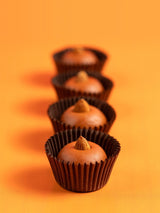
The Caramel Bites at The Coconut Sugar Company are the most direct demonstration of controlled caramelisation with coconut sugar. The caramel flavour is not added as an extract or essence. It is the result of cooking the sugar to exactly the right stage, where the multiple caramelisation and Maillard reactions have run their course and produced the full complexity of flavour that coconut sugar is capable of.
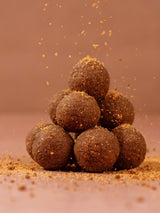
The Choco Almond Pearls illustrate a different application of the same principle. Chocolate and coconut sugar both involve Maillard chemistry, and combining them produces a flavour interaction where the two caramel-forward profiles reinforce each other. The result tastes deeper and more complex than either ingredient would suggest on its own. This is not a fortunate accident. It is what happens when two ingredients with complementary chemistry are brought together by a maker who understands both.
Understanding how sugar caramelises, and which sugars do so more richly and at what temperatures, is foundational to making sweets that taste genuinely interesting. Coconut sugar, with its complex composition and multi-stage flavour development, offers the most to a skilled confectioner. The knowledge of how to handle it is what separates a sweet that merely uses coconut sugar from one that actually expresses it.

