




The Name That Misleads
When most people hear the phrase 'coconut sugar', they picture something sweet and tropical, carrying the soft, milky scent of fresh coconut. The association is immediate and understandable. Coconuts have a distinctive flavour, and a sugar named after them seems to be offering a direct clue about what it will taste like. But pick up a cube of coconut sugar and taste it without any expectations, and you will quickly notice something surprising: it tastes nothing like coconut.
This is one of the most common misconceptions about coconut sugar, and it shapes how people approach it in both cooking and confectionery. The name describes WHERE the sugar comes from, not what it tastes like. Understanding that distinction is the first step to understanding why it is such a genuinely interesting ingredient.

Where Coconut Sugar Actually Comes From
Coconut sugar is made from the sap of coconut palm flowers, not from the fruit itself. Farmers cut the flower buds before they bloom and collect the nectar that flows out. This sap is then heated and reduced over low heat until most of the moisture evaporates, leaving behind a thick paste that is further dried and ground into the granulated or block form most people recognize.
The coconut flavour that most people associate with the fruit comes from the flesh, the oil pressed from it, and the cream extracted from it. These are entirely different parts of the plant with entirely different chemical compositions. The sap from the flower bud shares its botanical origin with the fruit but nothing of its flavour profile. By the time the sap is collected, reduced, and dried, there is no trace of that milky, tropical sweetness most people expect.

What Coconut Sugar Actually Tastes Like
The flavour of coconut sugar is best described as rich, warm, and caramel-forward. There is a depth to it that white sugar simply does not have, somewhere between butterscotch and toffee, with an undertone that recalls brown butter or slightly burnt caramel. Some batches have a faint earthiness to them, almost like molasses without the sharpness. Others are cleaner, leaning more toward smooth caramel.
The sweetness itself is milder than white sugar. It does not hit the palate as sharply, and it tends to linger a little longer. Where white sugar delivers a clean spike of sweetness that fades quickly, coconut sugar unfolds more gradually, leaving a rounded, warm finish. This quality makes it noticeably different even when used in small amounts, and it changes the character of whatever it is added to.
It is often compared to brown sugar or raw sugar, which is a reasonable starting point, but coconut sugar has more complexity than either. Brown sugar is simply white sugar with molasses added back. Coconut sugar has never been refined to that baseline in the first place, and the compounds that give it its flavour are native to the sap, not added after the fact.
Why This Flavour Profile Develops
Coconut palm sap contains a mixture of sucrose, glucose, and fructose, along with trace amounts of amino acids, essential minerals like potassium and zinc, and natural plant compounds. During the gentle reduction process, several things happen at once. The amino acids participate in what are called Maillard reactions, the same chemical processes responsible for the flavour of toasted bread, roasted coffee, and browned meat. These reactions produce hundreds of flavour compounds that are not present in the raw sap.
At the same time, the natural sugars begin to caramelise at temperatures well below those required to caramelise refined white sugar. This lower caramelisation threshold means the flavour development happens earlier and more thoroughly, resulting in the caramel character that defines coconut sugar. The process is delicate and small differences in sap composition, tree age, season, and batch size all influence the final flavour. No two batches are ever entirely identical, which is part of what makes it a genuinely artisanal ingredient.

How This Changes What You Taste in a Sweet
Using coconut sugar in a sweet means you are not just adding sweetness. You are adding a flavour of its own. White sugar is a neutral canvas: whatever else you put into a sweet, the sugar stays in the background. Coconut sugar has its own voice, and it speaks clearly even when used in small quantities. This means the maker has to think about it as an ingredient with character, not merely a functional component.
In cooked applications, like toffees, caramels and barfis, the caramel notes in coconut sugar deepen further with heat. The sweet tastes as though it has been made with more complexity and care than its simple ingredients might suggest. In cold or minimally cooked applications, like marzipan and nut-based sweets, the flavour is subtler but still clearly present, lending a warmth and roundness that white sugar cannot replicate.

What This Means for how The Coconut Sugar Company Makes Sweets
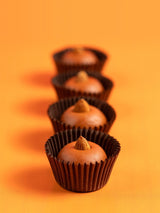
At The Coconut Sugar Company, coconut sugar is not used as a substitution for white sugar in the sense of simply swapping one for the other. It is the defining flavour ingredient, and every sweet in the range is designed around its natural caramel character rather than against it. Our Caramel Bites are the clearest expression of this: they are built to showcase exactly what coconut sugar tastes like when heat is applied slowly and carefully. The caramel is not an added flavouring. It is simply what the sugar becomes.
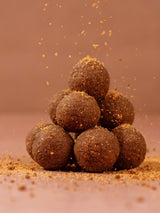
Similarly, our Coconut Pearls offer something interesting for anyone who expects coconut sugar to taste like coconut. They use both coconut sugar and actual desiccated coconut, and the two flavours are entirely distinct. The coconut sugar provides the caramel base and the binding sweetness. The coconut provides the tropical, slightly toasted note that floats above it. They work together precisely because they are different, and tasting them side by side in a single sweet makes that difference vividly clear.
Once you understand that coconut sugar does not taste like coconut, you start to understand what it actually brings to a sweet: complexity, warmth, and a caramel depth that white sugar simply cannot offer. That makes it an advantage and not a mere compromise.

