


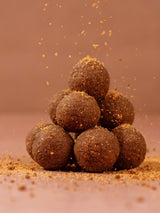



You've seen coconut sugar on ingredient lists, in specialty stores, maybe even in your friend's kitchen. But when it comes down to it, is coconut sugar actually different from white sugar, or is it just marketing?
Short answer: they're genuinely different products with different flavours, different origins, and different processing methods. Whether that matters to you depends on what you care about. Let's break it down honestly.
How They're Made
White sugar starts as sugarcane or sugar beet. The juice is extracted, heated, treated with chemicals to remove impurities, crystallised, and then bleached or centrifuged until you get those familiar white crystals. By the end, what you have is sucrose — roughly 99.9% of everything else stripped away.
Coconut sugar takes a completely different path. It comes from the sap of coconut palm flower buds — not from coconuts themselves, which confuses a lot of people. Farmers climb the palms, tap the flower buds, and collect the sap in containers. That sap is then heated in large open pans until the water evaporates, leaving behind golden-brown granules.
That's it. No bleaching, no chemical processing. The sap goes from tree to pan to jar.
Flavour: This Is Where It Gets Interesting
If you're comparing them purely on sweetness, white sugar wins. It's one-note sweet and that's by design. It's engineered to add sweetness without adding flavour.
Coconut sugar tastes different in a way that's hard to describe until you've tried it. The closest comparison is a mix of caramel and toffee, with a slight butterscotch warmth. It's sweet, but the sweetness has depth. There's an almost toasty quality, like brown sugar's more interesting cousin.
In baking, this matters. A cake made with coconut sugar has a richer, more complex flavour than one made with white sugar. In tea or coffee, it adds warmth rather than just sweetness. In Indian sweets — which is what we do at The Coconut Sugar Company — coconut sugar transforms the flavour profile entirely. Our Caramel Bites get their deep toffee flavour from the natural caramelisation of coconut sugar during preparation.
Appearance and Texture
White sugar: white crystals. You know what it looks like.
Coconut sugar: golden-brown granules, similar in appearance to raw or demerara sugar but finer. It dissolves slightly slower than white sugar in cold liquids but behaves almost identically in hot liquids and baking.
One thing to note: coconut sugar will change the colour of your recipes. A white frosting made with coconut sugar will be tan. That's fine for most uses, but worth knowing.
Where It Comes From
White sugar is a global commodity crop. Most comes from massive sugarcane plantations in Brazil, India, Thailand, and Australia.
Coconut sugar production looks nothing like that. In Southern India, where we source our coconut sugar, production is still done by small farming families using traditional methods passed down through generations. A single farmer might tend 20–30 palm trees, climbing each one daily to collect sap.
This isn't industrial agriculture. It's closer to artisanal craft. Each batch varies slightly depending on the season, the soil, and the individual tree. Our coconut sugar comes directly from these farming communities in rural Southern India.
Using Coconut Sugar in Your Kitchen
You can substitute coconut sugar for white sugar at a 1:1 ratio in most recipes. A few things to keep in mind:
In baking: Works perfectly in cookies, cakes, and brownies. The flavour is actually better in most cases. Expect a slightly darker colour.
In tea and coffee: Dissolves well in hot drinks. Adds a caramel warmth instead of flat sweetness. Start with slightly less than your usual amount of white sugar — you can always add more.
In Indian sweets: This is where coconut sugar really shines. The caramel depth pairs beautifully with nuts, cardamom, rose, and coconut. Every sweet in our coconut sugar sweets collection is built around this natural flavour pairing.
In savoury cooking: Coconut sugar works well in marinades, stir-fries, and curries where you'd normally add a pinch of sugar for balance. The toffee notes complement soy sauce, tamarind, and ginger particularly well.
The Honest Take
We make sweets with coconut sugar, so we're obviously biased. But here's what we genuinely believe after working with this ingredient every day: coconut sugar isn't a miracle product. It's sugar, your body processes it as sugar.
What it is, though, is a more interesting sugar. It tastes better. It's made through a simpler, more traditional process. And it supports small farming communities rather than industrial plantations.
If you're choosing between the two for your kitchen, try coconut sugar in your next cup of chai or your next batch of cookies. The flavour difference will tell you everything you need to know.
Try It Yourself
Our coconut sugar is available at Rs 450 and ships across India. Or explore our full range of coconut sugar sweets — each one showcases what this ingredient can do when paired with nuts and dried fruits.

