





The Problem With "Small-Batch" as a Label
Small-batch has become one of the most overused phrases in food marketing. It appears on products made by companies employing hundreds of people, on items sold in major supermarket chains, and on packaging that offers no clear indication of what the batch size actually is. The term has been diluted to the point where many consumers treat it as decoration rather than information.
That is a shame, because when small-batch production is genuine, it changes things in ways that matter and that are impossible to replicate at scale. The question worth asking is not whether a producer uses the label, but what their batch size actually enables them to do differently. The answer to that question tells you far more than the phrase itself ever can.
What a Large Batch Cannot Do
When production volume increases beyond a certain point, the relationship between the maker and the product necessarily changes. A large batch cannot be tasted and adjusted in real time the way a small one can. The person managing it cannot simultaneously evaluate every variable, ingredient freshness, sugar stage, flavour balance, texture development, and make changes before the critical window closes. The process has to be standardised enough to run without constant human intervention.
Standardisation means trade-offs. Ingredients are chosen for consistency and shelf stability rather than peak quality. Flavours are calibrated once and then reproduced. Fresh, variable ingredients that might produce excellent results on a good day are replaced by stable, processed versions that produce reliable results on every day. The sweet becomes very good at being the same, and loses the capacity to be genuinely excellent.

What a Small Batch Enables
A small batch allows the maker to engage with the product as a cooking process rather than a production process. The maker can taste the base as it develops, adjust the spice balance before setting, decide whether today's nuts need an extra moment of roasting based on how they smell. These are not improvised deviations from a recipe. They are the kind of continuous attention that produces consistently excellent results from ingredients that are, by their nature, slightly variable.
Small batches also mean that ingredient quality matters more, not less. When you are making twenty pieces rather than two thousand, the cost difference between a premium nut and a standard one is manageable. The flavour difference, however, is fully expressed in every single piece. There is nowhere to hide a lesser ingredient in a small batch the way there is in a large one, which is an incentive to use better materials, not a compromise.

The Preservative Question
Preservatives enter the picture when the time between production and consumption becomes unpredictable. At scale, a sweet might spend weeks in a distribution chain before it reaches the buyer. The product needs to remain stable across that time, which typically requires preservatives, stabilisers, or ingredients chosen specifically for their extended shelf life rather than their flavour.
Small-batch production with a shorter distribution window eliminates this constraint. When a producer makes and sells within a shorter cycle, preservative-free products become viable. The freshness is not merely a marketing claim. It is the direct result of not needing to engineer stability into the product for a six-month shelf life. The trade-off is that the producer must manage supply more carefully and produce more frequently, which is a real operational cost but also a genuine commitment to the ingredient.
What Changes Beyond the Obvious
The changes that small-batch production enables go beyond the frequently cited improvements in quality and freshness. They extend to what kinds of products can exist at all. A complex multi-component sweet that requires each element to be prepared separately and assembled at a specific stage cannot be produced at industrial scale. The timing, the individual attention, and the acceptable variability between pieces simply do not translate. Small batch is what makes such products possible.
It also changes the relationship between producer and product. When a maker produces a small batch, they know the batch. They were present for every stage of it. They tasted it, adjusted it, and decided it was ready. This is fundamentally different from a quality control sampling process applied to a large run. The difference is not merely philosophical. It shows up in the consistency of the product, which is different from uniformity. A small-batch product is consistent because the same level of attention is applied every time. A uniform product is consistent because the process has been engineered to eliminate variation, including the beneficial kind.

At The Coconut Sugar Company
The range of sweets at The Coconut Sugar Company is deliberately limited in variety and produced in genuine small batches. The Cashew Bliss Basket works as a luxury gifting product precisely because every component in it is made with the attention that only small-batch production allows. The cashew pieces are not an afterthought. They are the result of careful preparation, and that care is detectable in the eating.
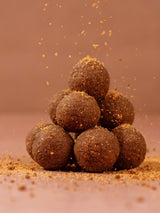
The Nut Fusion Bites require each type of nut to be handled differently before the components are brought together. This is only possible in small batches where each element can be given the specific preparation it needs. At scale, this kind of individual handling becomes cost-prohibitive and logistically impossible. The product that results from it could not exist in a factory. It exists because the maker makes it properly, in the quantity that proper making allows.
Explore the full artisanal sweets collection to see the range that genuine small-batch production makes possible. Each product in it represents a decision to make things the right way rather than the easy way, and that decision is present in every bite.

