




The Appeal and the Problem
Fruit in sweets sounds straightforward. The freshness, the colour, the natural tartness that brightens a sweet with too much richness: all of these qualities seem like obvious additions to a confectioner's palate. And they are. But fruit is also fundamentally incompatible with many of the chemical requirements of sweet-making, in ways that are not obvious until the sweet fails to set, or separates, or turns an unexpected colour.
The confectioners who make fruit-based sweets well understand that fruit is not simply an additional ingredient. It is a set of chemical challenges to be managed carefully. Every fruit brings moisture, acidity, pigments, and enzymes to the mix, and each of these interacts with sugar, fat, and heat in ways that require specific technical solutions. Getting it right involves understanding the problems first.
The Moisture Problem
Sugar work is fundamentally about controlling water. Boiled sugar confections, set sweets, and marzipan-style products all depend on achieving specific water activity levels that determine texture, shelf stability, and set. Fresh fruit is predominantly water. Adding it to a sugar base introduces free moisture that disrupts the carefully controlled water activity of the sweet.
What happens next depends on the specific sweet, but the patterns are predictable. In a set sweet like barfi or marzipan, fresh fruit prevents proper crystallisation of the sugar, leaving the sweet soft and unstable. In a sugar syrup or caramel, added fruit moisture changes the concentration, potentially dropping the mixture below the required sugar stage and preventing the correct texture from forming. The fruit does not cooperate with the requirements of sweet-making, at least not in its fresh form.

The Acid Problem
Most fruits are acidic, and acidity does something specific to sugar that complicates sweet-making significantly. Acid inverts sucrose: it catalyses the hydrolysis of sucrose into its component glucose and fructose molecules. This changes the hygroscopic properties of the sugar mixture, because fructose absorbs moisture from the air more aggressively than sucrose does. An inverted-sugar sweet is stickier and more prone to softening than one made from unmodified sucrose.
Cranberry is a strongly acidic fruit. Mango, particularly raw mango, is also quite acidic. Tamarind, used in some traditional confectionery contexts, is among the most acidic ingredients in the pantry. Each of these can invert the sugar in a sweet during cooking, with effects on texture and shelf stability that the recipe needs to account for explicitly. Coconut sugar, being less refined, has a slightly different response to inversion than refined white sugar, which is another variable for the maker to understand.
The Colour Problem
One of the most appealing things about fruit is its colour, and one of the most reliable frustrations in fruit-based confectionery is how that colour behaves under heat. The pigments responsible for the red of cranberry, the orange of mango, and the deep purple of certain berry fruits are anthocyanins: water-soluble pigments that are highly sensitive to both heat and pH changes.
When these pigments are cooked at the temperatures required for sugar work, they undergo structural changes that alter or destroy their colour. Red cranberry turns brownish. Vibrant mango orange becomes dull and golden. The colour that made the fruit appealing in its raw state is not the colour you will have when the sweet is finished. This forces a choice between natural colour (which means finding ways to add fruit without cooking it, or accepting colour change) and artificial colour (which is not an option for makers committed to natural ingredients).

Why Dried Fruit Is the Practical Answer
Dried fruit solves the moisture problem and partially addresses the colour problem. The drying process removes most of the free water from the fruit, dramatically reducing its disruption to sugar crystallisation. Dried cranberries, figs, dates, and apricots all retain their flavour concentration (often with higher intensity per gram than fresh fruit) while introducing far less moisture into the sweet. They can be incorporated into sugar-based confections without destabilising the texture.
Dried fruit also concentrates the fruit's acidity into a smaller mass, which means the overall contribution of acidity to the sweet is more controllable. And the colour of dried fruit, while different from fresh, is stable. Dried cranberries have a consistent deep red that does not change with cooking in the same volatile way that fresh cranberry pigments do.
Techniques That Help
Beyond using dried fruit, specific preparation techniques reduce the technical difficulties of incorporating fruit into sweets. Coating dried fruit in a thin layer of fat, typically ghee or a neutral oil, before adding it to a sugar base creates a barrier that slows moisture migration between the fruit and the surrounding sweet. This extends the window during which the sweet remains properly textured.
Timing is equally important. Fruit added to a sugar base while the base is still very fluid will release more of its remaining moisture into the hot sugar. Fruit added once the base has been cooked to a stage where it has lost most of its own moisture has less gradient driving moisture migration, and integrates more cleanly. These timing decisions cannot be generalised across all recipes. They depend on the specific fruit, the specific sugar, and the specific format of the sweet.

How This Shows Up in the Range
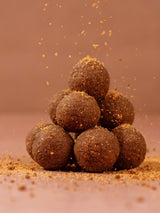
The Cranberry Date Bites use dried cranberry and date, combining two fruits that solve the moisture and stability problems through their dried form. The cranberry's tartness is intact and provides the contrast that makes the date's sweetness more expressive. The date contributes its own natural sweetness, which means the coconut sugar base can be used in a more restrained way, producing a sweet that feels complete without being heavy.
The Kaju-Fig Sandwich uses fig in a form and preparation that integrates with the cashew base without disrupting its texture. The fig element is not layered on top as a garnish but incorporated in a way that makes it structurally part of the sweet. This is possible because of specific preparation choices that account for the fig's moisture and acidity from the outset.
Adding fruit to sweets is genuinely hard. Getting it right requires the kind of technical understanding that can only be built through practice and careful attention to what goes wrong and why. The artisanal sweets collection is the result of exactly that process: sweets where the difficulty of the technique is invisible, absorbed into a result that tastes easy and natural, as though the fruit could not have been anywhere else.

